

Technology that movesthe result.
It does not always turn out that way.
Companies invest in technology to grow, operate better and respond faster to the market. In practice, business and technology move in different directions. Investment rises and results do not follow.

Simple changes take longer than they should
Every tweak becomes a project. The business waits, the competitor does not.

The business decides and technology finds out later
Priorities arrive finished, with no time to prepare the base. The deadline slips.
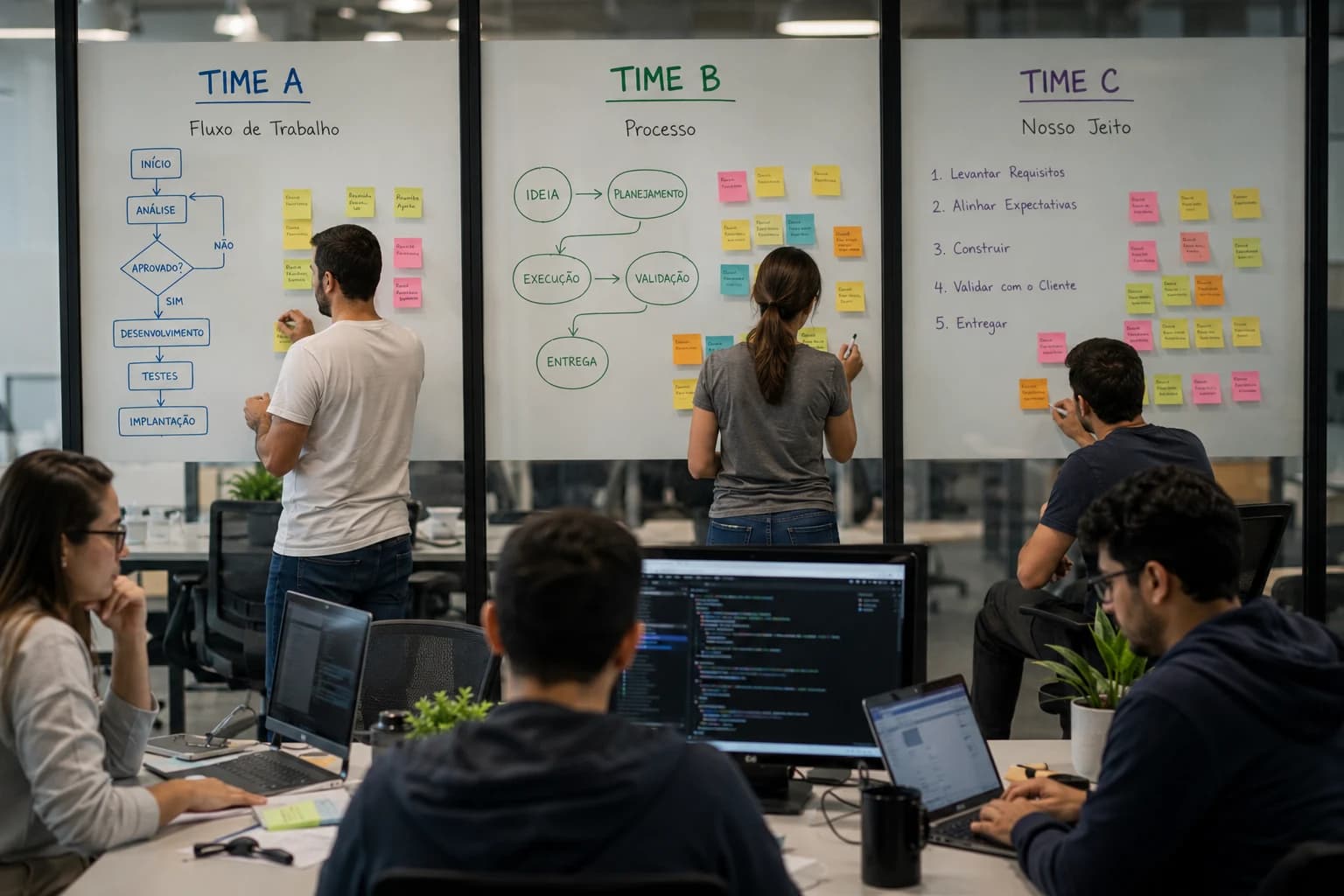
Each team works its own way
Without a standard, what one team solves the other repeats. Scale never comes.
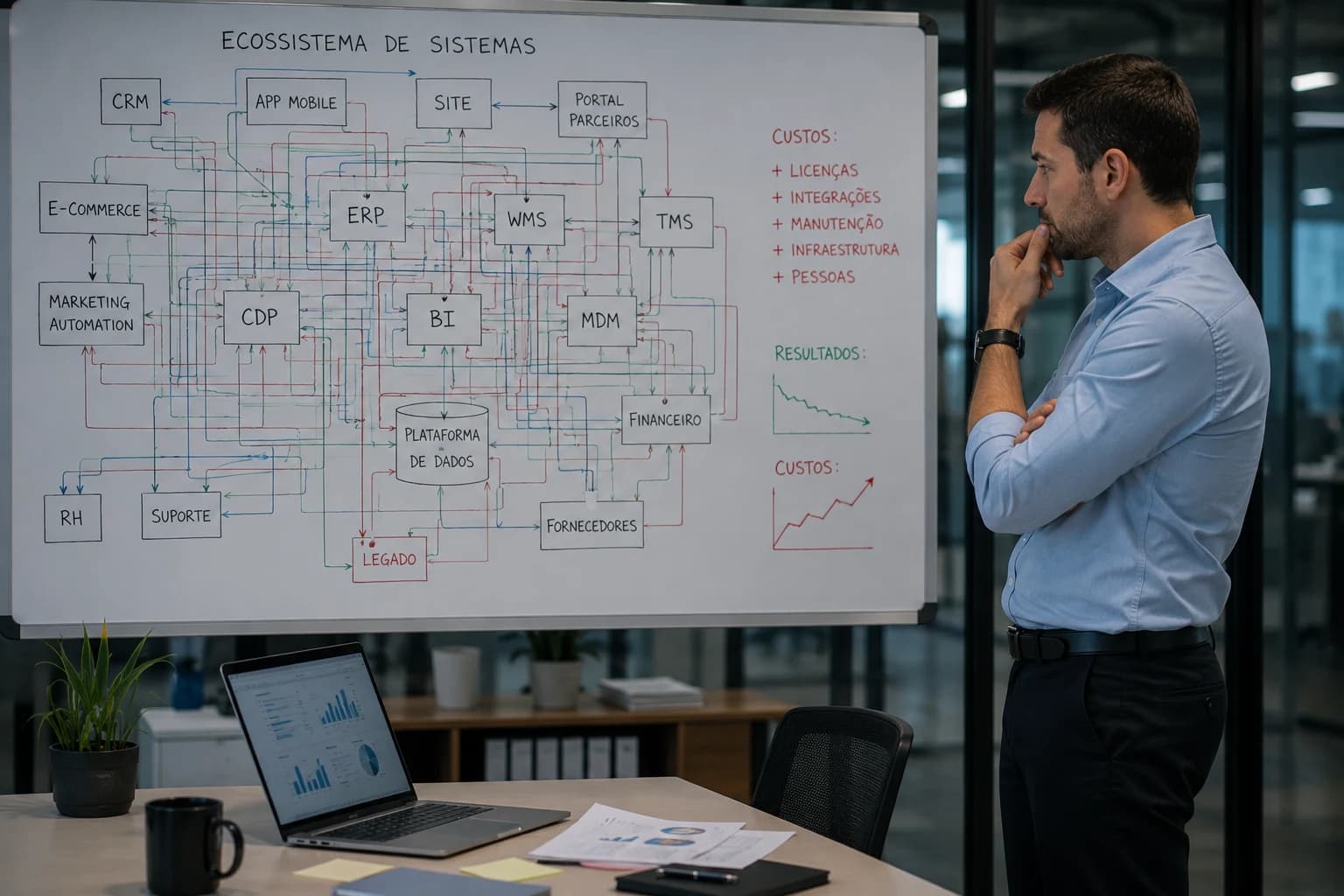
Growth multiplies complexity, not results
More systems, more integrations, more cost. Margin does not keep up with revenue.

Data does not support the decision
Each area brings a different number. The decision stalls in doubt.
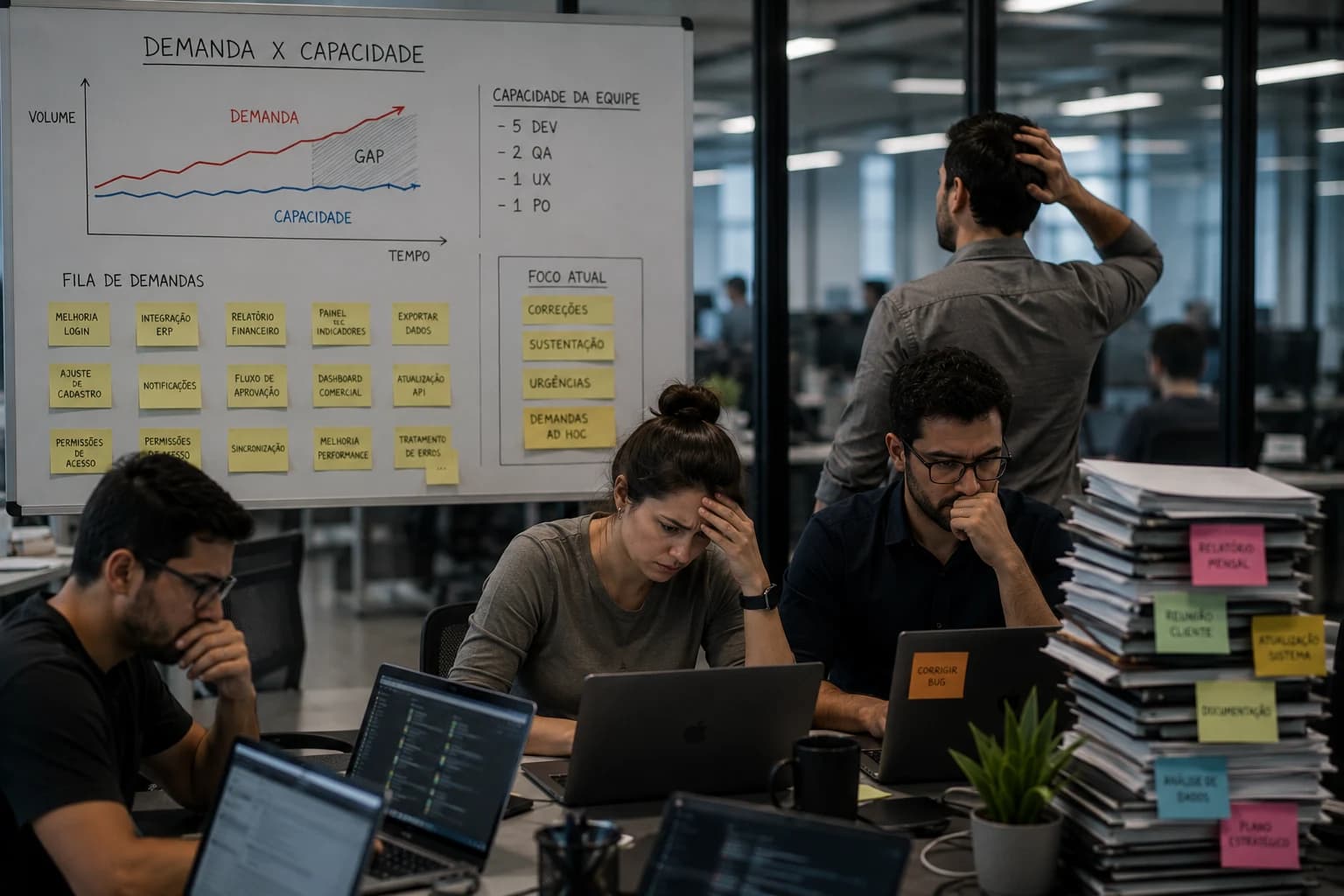
Demand grows faster than the capacity to deliver
The queue grows and the team saturates. What matters waits.
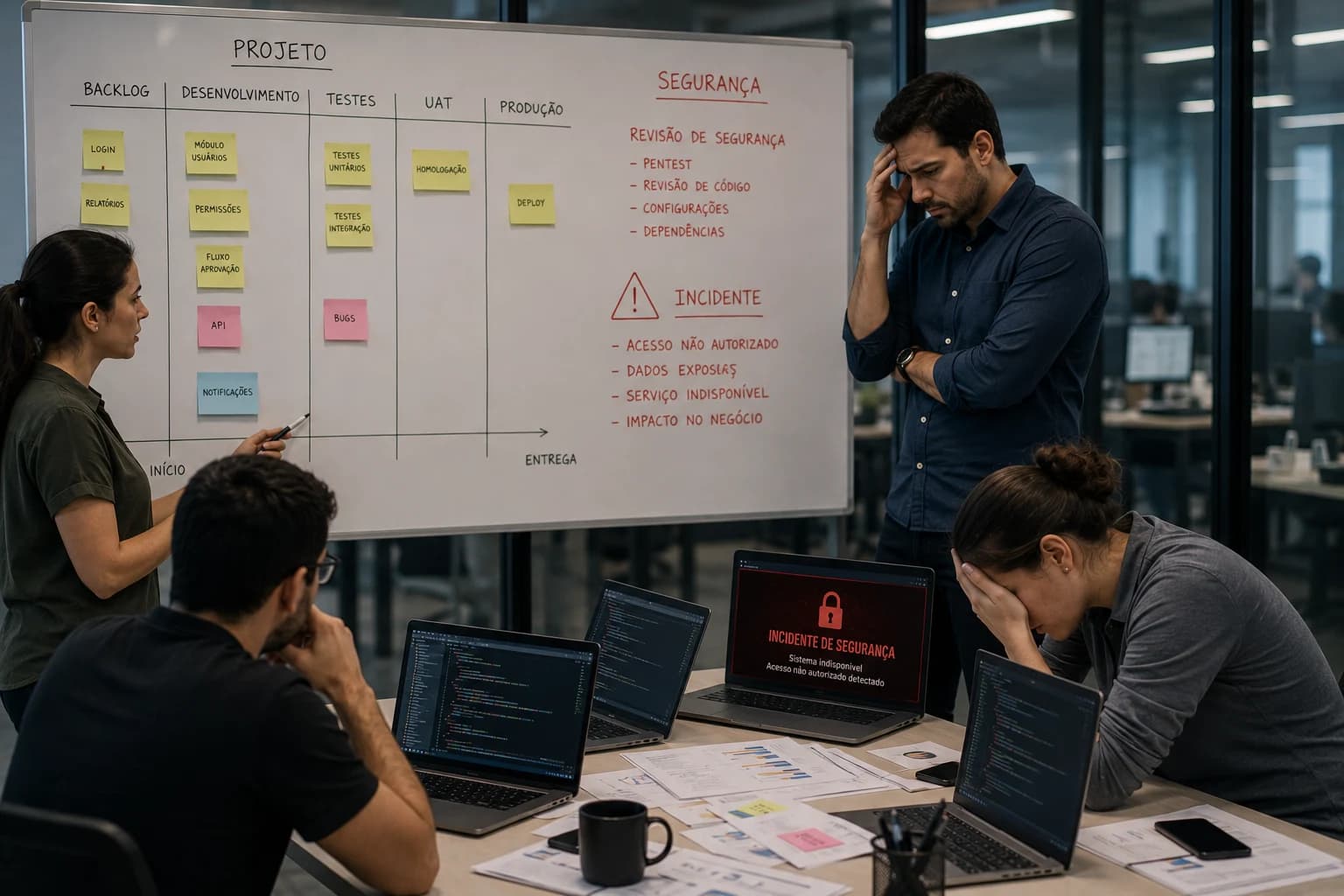
Security shows up late and becomes a brake
It enters at the end of the cycle and delays delivery. When it fails, it becomes an incident.
We connect strategy, technology and execution.
We help companies identify what is holding back their growth, define the right path and put the changes into practice. We turn challenges into concrete results.
 01
01Identifying what limits.
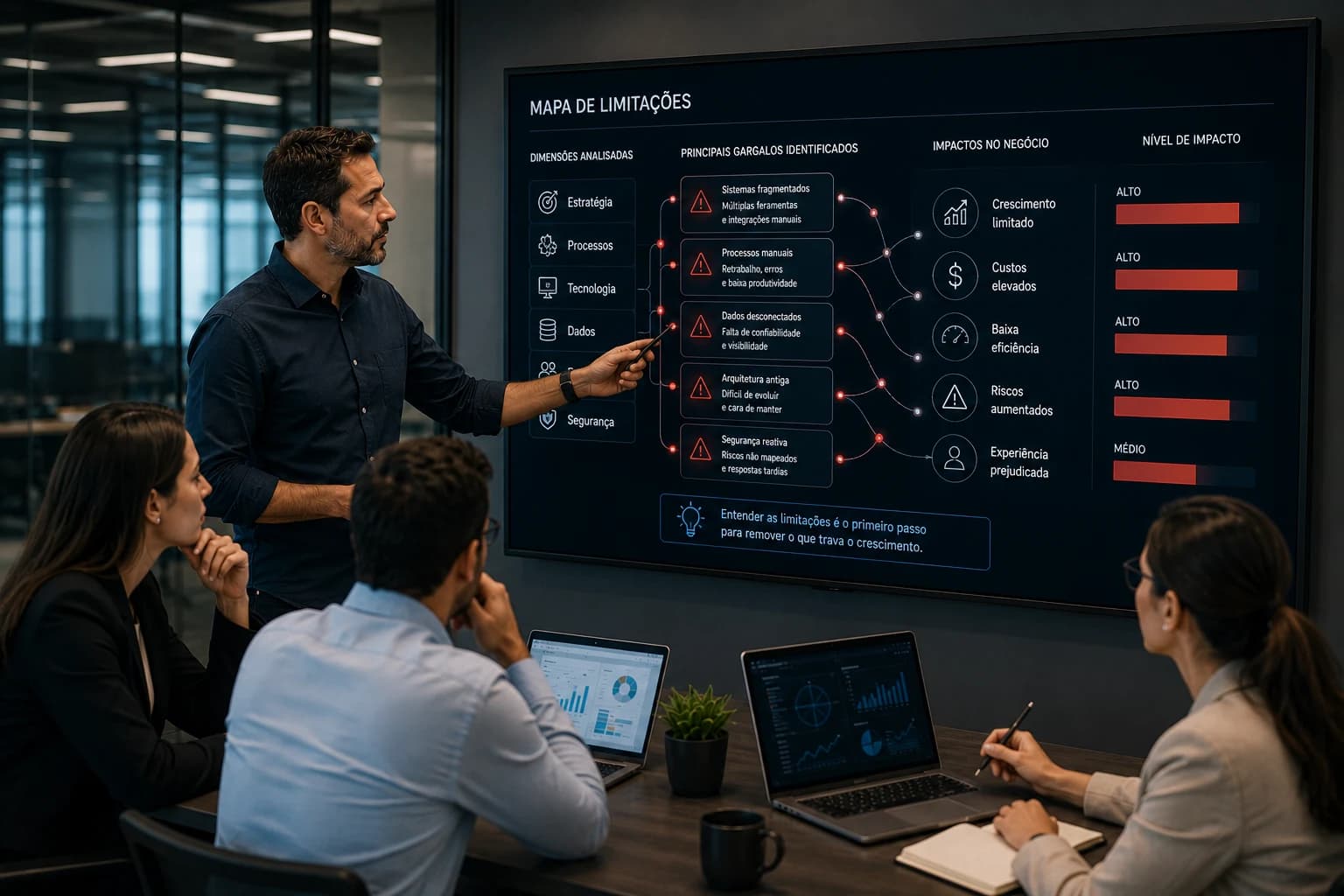
We map where technology blocks growth, creates waste and adds risk.
 02
02Defining the path.
We prioritize initiatives by impact on results, not by trend.
 03
03Putting it into practice.
The right people next to your team until the change runs inside the operation.
One system, three stages
One continuous path, from diagnosis to operation. First we find where technology blocks the result. Then we evolve the right capabilities. And we sustain the gain over time.
Diagnostic
Capability AssessmentWe show where technology blocks results, how much each gap costs and where to start.
Learn about AssessmentEvolution
Capability Evolution ProgramWe evolve priority capabilities in quarterly waves, with measurable gain each quarter.
Learn about the ProgramSustaining
Operating SystemWe keep capabilities running, with continuous governance and evolution, to protect the gain.
Learn about OSWhat the board needs to read
Capability, governance and result. Concrete analysis to help technology and business leaders defend investment with thesis, not slides.

Approving everything is the most expensive way to supervise an AI agent
Human attention is a finite resource with a price. When a company spends it confirming what was already correct, it is gone by the time an expensive decision arrives. Four distinct oversight functions solve different problems, and picking the wrong one produces a queue instead of control.

The same agent can read an invoice alone and still need authorization to pay it. Autonomy belongs to the action, not the agent.
Capability answers whether the agent can. Autonomy answers whether it may act alone. Four factors decide that action by action: impact of the error, ability to correct the consequence, time to notice and reach before anyone can interrupt. Two mistakes show up on the way, the average that hides the critical factor and the human approval that becomes a rubber stamp.

The future manager does not manage tasks. They decide execution, autonomy and accountability.
When agents absorb task coordination, managerial value moves to five decisions made before execution begins. Outcome, work decomposition, execution mode, autonomy and the human-agent handoff. Two mistakes show up on the way: the manager who becomes an approval queue, and the company that automates the work that was training its people.

Hybrid enterprises require a new way to lead people and AI agents
The hybrid enterprise is defined by its ability to distribute work between people and agents without losing clarity of responsibility, not by the number of agents it runs. Technical capability and organizational autonomy are separate decisions, the autonomy level follows the risk of the work, and accountability stays human even when execution does not.

IT governance decides the return on technology
Most executives treat IT governance as a compliance cost and turn it into a brake. The correct reading is the opposite. Governance is the mechanism that decides where technology capital produces return and where it only produces expense. Clear decision rights, risk-proportionate guardrails and a value-prioritized portfolio decide the speed, the cost and the result.

Technology strategy and execution deliver results together
Technology strategy and execution split apart when installed capability is missing, not ambition. Architecture, data, governance, platform and teams are the link that turns decision into result. Without it, the approved plan and the executed backlog each follow their own logic.

Best platform engineering practices for enterprises
An internal platform that depends on heroic teams has already failed. The best practices treat the platform as a product, reduce variability where it destroys margin, embed governance in the flow and measure adoption and result, not the number of delivered components.
Clients
Market leaders evolve their capabilities with us. Organizations that turned technology capability into defensible financial result.




















Ready to map what is limiting result?
Capability Assessment in 47 days. Maturity map, financial impact of each gap and roadmap prioritized by risk-adjusted return. We help your team arrive at the board with a defensible thesis.